Change blindness
Change blindness is the failure to detect substantial changes to a visual scene when the change coincides with a brief disruption — a blink, a cut, a flicker, or a moment of occlusion. Large objects can be removed, swapped, or recolored without observers noticing, revealing how sparse our internal representation of the world really is.
How it works
We feel we hold a continuous, detailed model of the scene, but we mostly store a gist and re-query the world as needed. Detecting change requires comparing representations before and after — and without attention on the changed object, there is nothing stored to compare. In Simons and Levin's door study, half of pedestrians giving directions failed to notice their conversation partner being swapped for a different person behind a passing door.
Where it shows up
- Film continuity errors — props jumping between shots — go unnoticed by audiences and editors alike.
- A dashboard redesign quietly changes a metric's definition; analysts keep reading it for weeks without noticing the discontinuity.
- Interface changes made during page transitions or loading screens escape user awareness entirely.
What it can distort
- Confidence in having 'watched the whole thing' provides no guarantee that changes were registered.
- Gradual or transition-masked changes — in scenes, documents, systems — evade human review by default.
How to work around it
- Use diffs, not memory: for anything where changes matter, machine comparison of before/after states replaces unreliable human change detection.
- Highlight changes explicitly in interfaces and documents rather than trusting users to spot them.
- For critical monitoring, avoid designs where updates coincide with visual disruptions.
Critiques and limits
Change blindness shows representation is sparse, not absent — meaningful, attended, and task-relevant changes are detected far better; the 'blindness' label can overstate everyday dysfunction.
Fields of impact
How solid is the research?
A cornerstone of visual cognition research with consistent replication across paradigms including real-world interactions.
Relevant papers
Rensink, R. A., O'Regan, J. K., & Clark, J. J. (1997)
Psychological Science, 8(5), 368-373
Simons, D. J., & Levin, D. T. (1998)
Psychonomic Bulletin & Review, 5(4), 644-649
Real-world patterns.
When emotion starts driving the decision
A leadership team is reviewing a promising initiative under deadline pressure. Early reactions to the concept are strongly positive, and that emotional tone begins shaping the discussion before anyone has separated likely upside from operational risk.
Context
A team makes a high-stakes decision under time pressure, and their first emotional reaction starts shaping how risky and how promising the option feels.
Situation
Early signals look encouraging, the narrative feels compelling, and the group begins to evaluate the opportunity through that positive feeling instead of separating upside from downside.
The bias in action
The emotional tone of the option begins to stand in for careful analysis, shrinking perceived risk while inflating expected benefit.
Outcome
The decision moves forward with less scrutiny than it would have received under a more explicit risk-benefit review.
Continue reading for the full case, measurable impact, and lessons learned.
Want the full analysis?
Request access to the complete case study, including measurable impact, lessons learned, and the recommended better approach.
Recommended books
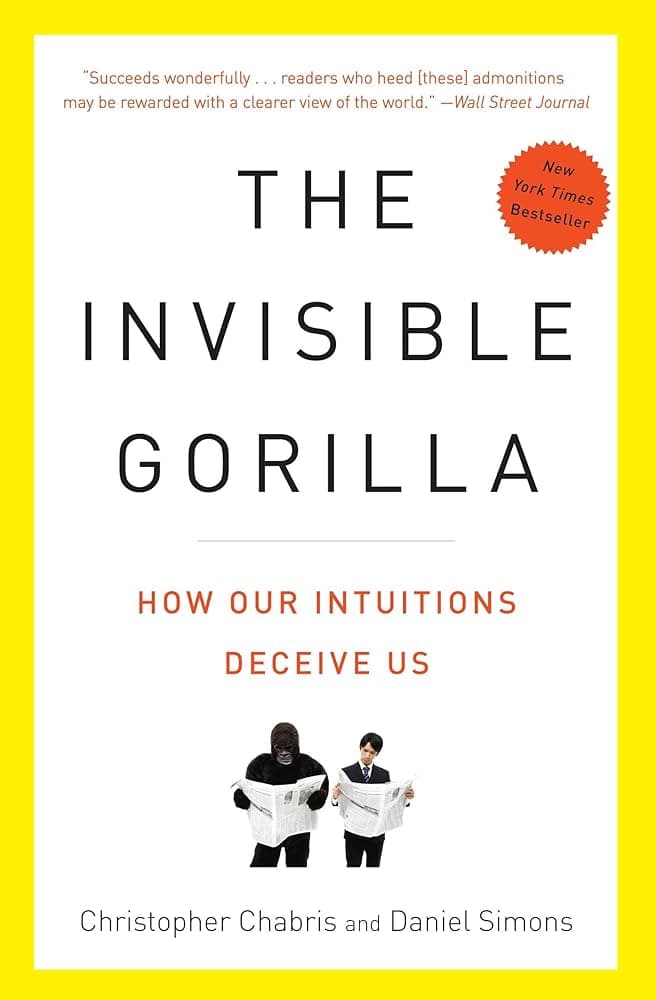
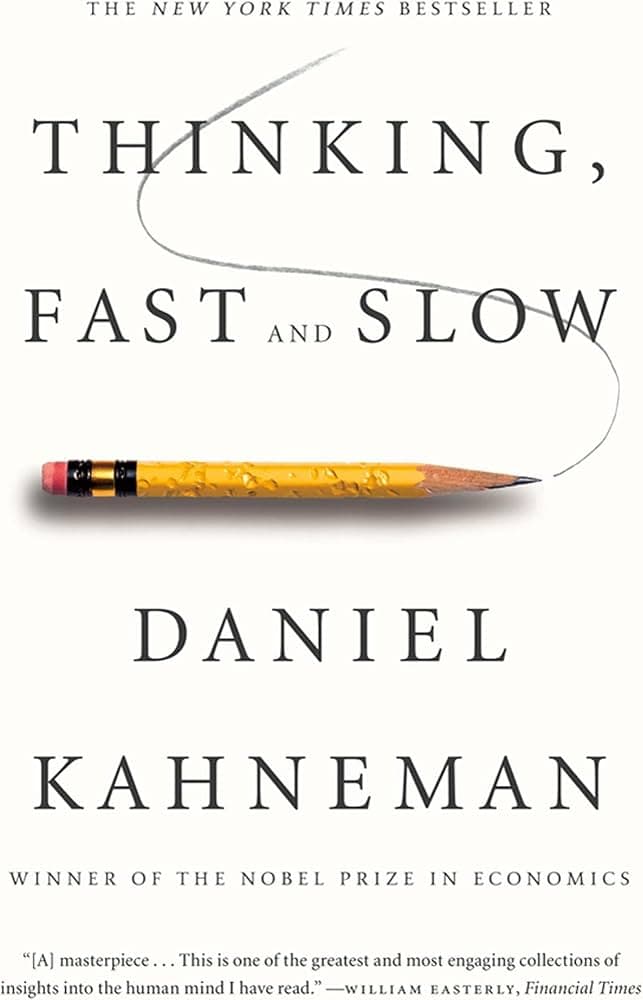
Nearby patterns.
Inattentional blindness
Inattentional blindness is the failure to notice a fully visible but unexpected object or event when attention is engaged elsewhere.
Continued influence effect
The continued influence effect is using misinformation in reasoning after learning that it was false.
Well-traveled road effect
A familiar commute can feel short because it demands little attention; an unfamiliar route can feel long because every turn is new.
Learn the wider pattern.
Dive deeper into Change blindness and related biases in Perception and Representation Biaseswith structured lessons, examples, and practice exercises.
Entry last reviewed 2026-07-19 · sources verified against the published literature — methodology