Regression to the mean (neglect of)
Regression to the mean is the statistical fact that extreme measurements tend to be followed by less extreme ones, simply because extremes are partly luck. The bias is our systematic failure to expect this: we attach causal stories — credit, blame, interventions that 'worked' — to changes that are just statistics doing what statistics does.
How it works
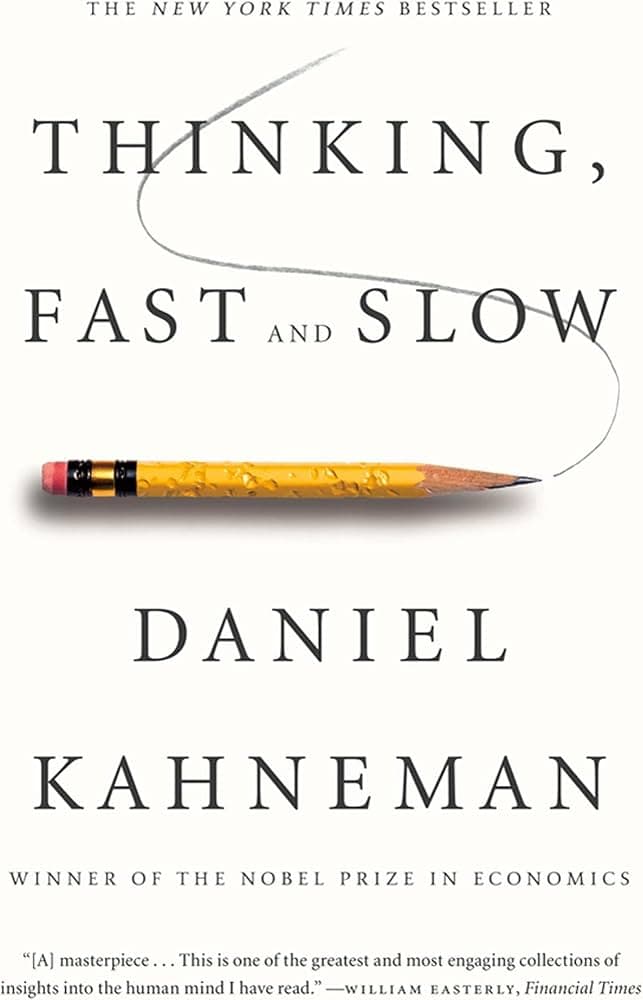
Any outcome combines skill and luck. An exceptional result usually means both were high, and since luck doesn't persist, the next result is typically closer to average — with no change in the underlying skill. Because the mind demands causal explanations, the regression gets misattributed: the sales rep 'lost their edge,' the intervention applied at the worst moment 'worked.' Kahneman's flight-instructor example is canonical: praise after great landings was followed by worse ones, punishment after bad landings by better ones — teaching instructors that punishment works.
Where it shows up
- A 'turnaround' program applied to the quarter's worst-performing stores shows improvement that would have happened anyway.
- The Sports Illustrated cover jinx: athletes appear after peak performances, which regress on schedule.
- A hire made after one spectacular interview performance disappoints; the interview was their luckiest hour, not their average.
What it can distort
- Interventions targeted at extremes (worst performers, crisis moments) get systematically overcredited, entrenching useless remedies.
- Punishment appears to work and praise appears to backfire, biasing management cultures toward criticism.
How to work around it
- Before crediting any intervention applied to an extreme case, ask what change regression alone would predict — that's your null hypothesis, not zero.
- Evaluate with control groups or at least compare against the base-rate bounce-back of past extremes.
- In forecasting from an exceptional data point, shrink toward the mean in proportion to how much luck plausibly contributed.
Critiques and limits
Not every rebound is regression — real mean shifts happen; the discipline is distinguishing them with controls rather than assuming either story.
Fields of impact
How solid is the research?
The statistical phenomenon is mathematical fact; the human failure to anticipate it is one of the best-documented prediction errors.
Relevant papers
Kahneman, D., & Tversky, A. (1973)
Psychological Review, 80(4), 237-251
Galton, F. (1886)
The Journal of the Anthropological Institute of Great Britain and Ireland, 15, 246-263
Real-world patterns.
When emotion starts driving the decision
A leadership team is reviewing a promising initiative under deadline pressure. Early reactions to the concept are strongly positive, and that emotional tone begins shaping the discussion before anyone has separated likely upside from operational risk.
Context
A team makes a high-stakes decision under time pressure, and their first emotional reaction starts shaping how risky and how promising the option feels.
Situation
Early signals look encouraging, the narrative feels compelling, and the group begins to evaluate the opportunity through that positive feeling instead of separating upside from downside.
The bias in action
The emotional tone of the option begins to stand in for careful analysis, shrinking perceived risk while inflating expected benefit.
Outcome
The decision moves forward with less scrutiny than it would have received under a more explicit risk-benefit review.
Continue reading for the full case, measurable impact, and lessons learned.
Want the full analysis?
Request access to the complete case study, including measurable impact, lessons learned, and the recommended better approach.
Recommended books
Nearby patterns.
Outcome bias
Outcome bias is treating a decision as good because it worked out, or bad because it did not, even when the result depended heavily on luck..
Illusion of validity
The illusion of validity is feeling confident in a judgment because the evidence forms a coherent story, even when it predicts poorly..
Hot-hand fallacy
The hot-hand fallacy is seeing a run of successes and inferring that the next success is more likely, when the process has no memory.
Survivorship bias
Survivorship bias is drawing conclusions from the winners we can see while missing the failures that vanished from view.
Disposition effect
A gain feels ready to celebrate; a loss feels easier to postpone.
Learn the wider pattern.
Dive deeper into Regression to the mean (neglect of) and related biases in Reasoning and Logical Fallacieswith structured lessons, examples, and practice exercises.
Entry last reviewed 2026-07-19 · sources verified against the published literature — methodology