Illusion of validity

The illusion of validity is a cognitive bias that occurs when people overestimate their ability to interpret and predict outcomes in situations based on limited information. It is part of the broader category of cognitive biases related to our need for meaning, specifically within storytelling scenarios wherein sparse data is available. This bias leads individuals to have unwarranted confidence in their predictions or judgments, often overlooking the foundational issues of insufficient data or the complexity of the situations.

How it works

The illusion of validity is primarily fueled by a combination of retrospective coherence and overconfidence. When encountering a dataset or pattern, individuals tend to create narratives that seem logical and coherent, thereby reinforcing their belief in the accuracy and reliability of their conclusions. This narrative consistency lends a false sense of validity, despite the underlying data being sparse or unrepresentative. This bias is further reinforced by the human tendency to seek patterns and simplicity, often neglecting ambiguity and complexity.

Examples

A common example of the illusion of validity is found in stock market predictions. Analysts often interpret a handful of indicators to predict market trends confidently, despite the inherently volatile and unpredictable nature of markets. Similarly, in educational settings, teachers might predict a student’s future success based on a few initial impressions or test scores, ignoring other potential influences on the student's performance.

Consequences

The illusion of validity can lead to poor decision-making and risk assessment. Overconfidence stemming from this bias may cause individuals and organizations to make investments, create policies, or choose strategies based on insufficient evidence, leading to potential losses and failures. It can result in misplaced trust in expert opinions and forecasts and may perpetuate stereotypes and misconceptions by emphasizing simplified narratives over nuanced understanding.

Counteracting

Counteracting the illusion of validity involves fostering awareness of cognitive biases and promoting critical thinking. Encouraging skepticism and diverse perspectives can help challenge the surface narratives created by sparse data. Relying on robust data collection methods, acknowledging the limits of human prediction, and using statistical models can also mitigate this bias. Training in probabilistic reasoning and exposure to diverse viewpoints are practical steps to reduce overconfidence in judgment.

Critiques

Some critiques of the concept argue that the illusion of validity is difficult to empirically separate from other forms of biases like overconfidence. Additionally, critics suggest that individuals can learn and adapt over time, reducing the impact of this illusion as they refine their predictive models based on past errors. Moreover, within certain conditions, minimal information may still yield useful insights, leading to questions about when this bias is truly detrimental.

Also known as

Overconfidence Effect
Inference Bias

Relevant Research

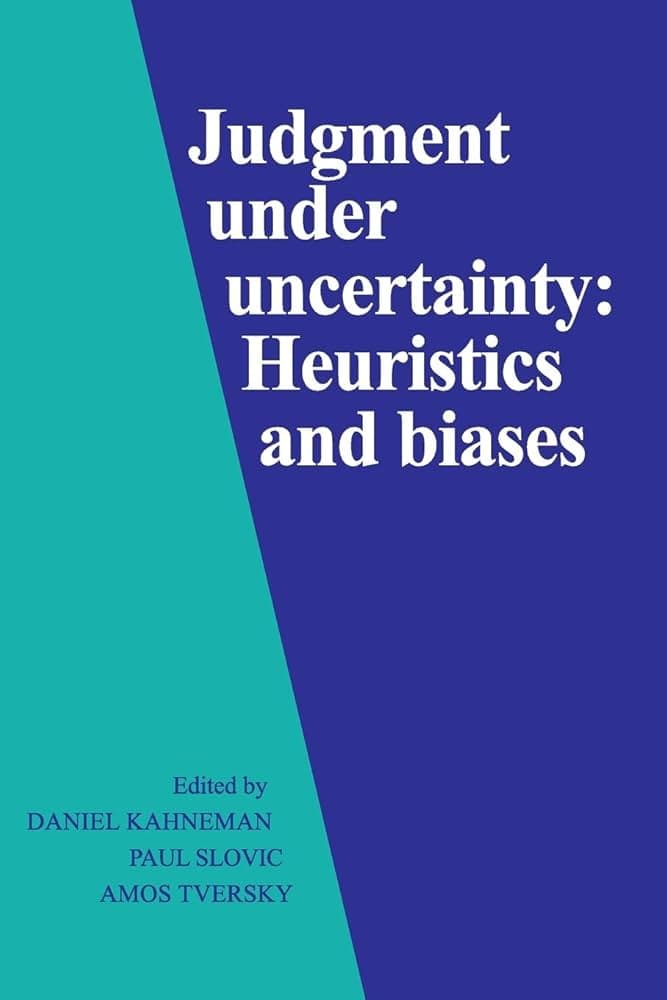
  • Judgment under Uncertainty: Heuristics and Biases

    Amos Tversky, Daniel Kahneman (1974)

    Science

  • Overconfidence in Case-Study Judgments

    Paul Slovic, Baruch Fischhoff (1977)

    Journal of Organizational Behavior and Human Performance

  • The Robust Beauty of Improper Linear Models in Decision Making

    Robyn M. Dawes (1979)

    American Psychologist

Case Studies

Real-world examples showing how Illusion of validity manifests in practice

When Confidence Outpaced Data: A Fintech's Risk Model That Didn't Generalize
A real-world example of Illusion of validity in action

Context

A fintech startup built a credit-scoring model during its first year of operations using early customer data. Leadership and the founding data scientist grew quickly confident that the model reliably identified low-risk borrowers.

Situation

The team trained a predictive model on 520 early applicants who had high engagement and relatively homogeneous profiles. Impressed with apparently strong accuracy on the training set and a small cross-validation holdout, executives decided to scale lending to thousands of new users without an extended pilot or external validation.

The Bias in Action

Decision-makers interpreted the model's performance on the limited internal dataset as proof of predictive skill rather than a likely artifact of small, non-representative samples. They discounted warnings from a junior analyst who recommended a wider validation sample, attributing discrepancies to noise rather than a structural problem. Confidence in the model's apparent precision led the company to expand marketing and increase loan volume, assuming the early signal would hold. The team explained the model's success in simple causal terms — that their product attracted lower-risk customers — without testing that assumption.

Outcome

Within six months of scale-up, the live default rate climbed to 18% among newly acquired borrowers, compared with 6% in the original sample and the 5% target used in financial planning. The company paused originations after 9 months to reassess, having incurred roughly $2.2 million in net credit losses and requiring emergency capital to maintain operations.

Study on Microcourse
Learn more about Decision-Making and Risk Biases with an interactive course

Dive deeper into Illusion of validity and related biases with structured lessons, examples, and practice exercises on Microcourse.

Test your knowledge
Check your understanding of Illusion of validity with a short quiz

Apply what you've learned and reinforce your understanding of this cognitive bias.

Illusion of validity - The Bias Codex