Zero-risk bias

Zero-risk bias is a cognitive bias where individuals prefer to eliminate a small risk entirely over reducing a larger risk by a greater margin. This preference occurs even when the latter option is statistically safer or more advantageous. This bias reflects our affinity for certainty and the psychological comfort derived from completely eradicating a particular risk.

How it works

The zero-risk bias stems from our desire for certainty and the aversion to ambiguity associated with any level of risk. This bias engages our emotional responses, leading us to make decisions that prioritize absolute risk elimination, despite more rational options being available. Psychologically, certainty offers a sense of control and resolution, making zero-risk options more appealing.

Examples

  • In healthcare, a patient might prefer to undergo a procedure that completely eliminates a minor health risk, even if it means bypassing a treatment that significantly reduces a major health risk more effectively.
  • In environmental policies, governments may allocate resources to eliminate small, particular types of pollution completely, ignoring broader, more impactful interventions that would reduce overall pollution levels.
  • In personal finance, an individual might choose to pay off a small debt entirely, rather than focusing their resources on making significant payments towards larger debts with higher interest rates.

Consequences

Zero-risk bias can lead to suboptimal decision-making, resource misallocation, and inefficiencies. By focusing on completely eliminating minor risks, individuals and organizations may overlook or inadequately address larger risks that represent a more significant threat or opportunity for improvement. This can result in overall higher costs and lesser benefits than if a more balanced approach had been taken.

Counteracting

To counteract zero-risk bias, individuals and organizations should employ decision-making frameworks that emphasize probability and impact assessment. Encouraging a more analytical approach where risks are evaluated on their magnitude and impact can help prioritize actions that are statistically more beneficial. Education and awareness of the bias can also guide more balanced decision-making.

Critiques

One critique of identifying zero-risk bias is that it oversimplifies complex decision-making scenarios where emotional, social, and contextual factors play significant roles. Some argue that eliminating risks completely in certain situations might provide psychological benefits or align with ethical considerations, which cannot be wholly quantified in economic or statistical terms.

Relevant Research

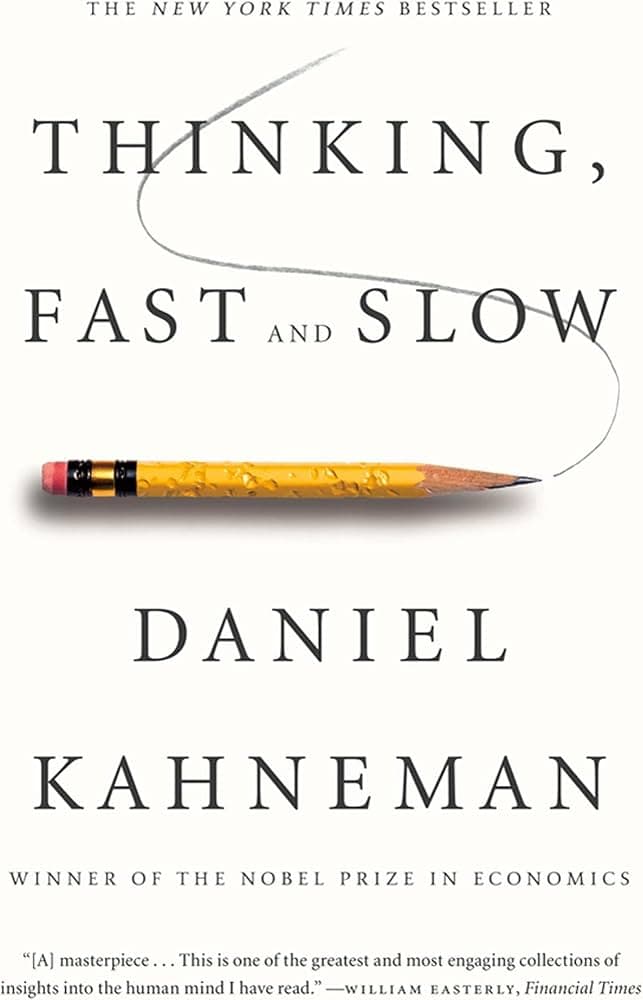
  • Thinking, Fast and Slow

    Kahneman, D. (2011)

    New York: Farrar, Straus and Giroux

  • The framing of decisions and the psychology of choice

    Tversky, A., & Kahneman, D. (1981)

    Science, 211(4481), 453-458

  • Why study risk perception? Risk Analysis, 2(2), 83-93

    Slovic, P., Fischhoff, B., & Lichtenstein, S. (1982)

Case Studies

Real-world examples showing how Zero-risk bias manifests in practice

Closing the Wing to Eliminate One Risk — and Ignoring Bigger Ones
A real-world example of Zero-risk bias in action

Context

A 320-bed regional hospital identified two ongoing safety problems: a rarely used inpatient wing with intermittent water-system contamination linked to one confirmed infection per year, and hospital-wide hand-hygiene noncompliance estimated to cause dozens of healthcare-associated infections (HAIs) annually. Leadership faced pressure from a patient-safety committee and an alert from an external auditor.

Situation

Hospital executives needed to choose an immediate mitigation strategy while preparing a longer-term safety plan. The choices were (A) shut down and decontaminate the affected wing immediately, which would entirely eliminate that specific water-source risk but be costly and disruptive, or (B) invest in a broad hand-hygiene improvement program (training, monitoring, alcohol dispensers, feedback systems) expected to reduce overall HAIs by an estimated 60%.

The Bias in Action

Decision-makers opted to close and decontaminate the wing immediately because that action would completely eliminate the specific contamination risk — delivering a clear, certain result that was easy to communicate to regulators and the public. They treated the single-source elimination as a satisfying, visible win and deprioritized the broader hygiene program despite data showing it would prevent far more infections. The choice reflected a preference for removing one discrete risk entirely (zero risk from the wing) rather than taking the more complex, probabilistic action that reduced a larger aggregate risk but did not guarantee zero infections.

Outcome

The wing closure eliminated the one water-source infection but created capacity and operational problems: elective surgeries were canceled, patients were diverted to other wards or nearby hospitals, and staff resources were stretched. Because the hand-hygiene program was delayed, overall HAI rates did not fall and, within six months, crowding and staff workload correlated with an increase in other HAIs.

Study on Microcourse
Learn more about Motivational and Emotional Distortions with an interactive course

Dive deeper into Zero-risk bias and related biases with structured lessons, examples, and practice exercises on Microcourse.

Test your knowledge
Check your understanding of Zero-risk bias with a short quiz

Apply what you've learned and reinforce your understanding of this cognitive bias.

Zero-risk bias - The Bias Codex