Present bias
Present bias is the tendency to give disproportionate weight to immediate costs and rewards relative to future ones — beyond what any consistent discounting of the future would justify. We plan patiently for our future selves, then reliably overrule the plan when the moment arrives.
How it works
In economic models (Laibson's quasi-hyperbolic discounting, O'Donoghue and Rabin's 'doing it now or later'), present bias is the extra premium placed on 'right now.' Choosing between $100 in 52 weeks and $110 in 53 weeks, most people wait the extra week; choosing between $100 today and $110 next week, many take the $100 — the same one-week trade-off valued differently because one option is immediate. The result is preference reversal: plans made for the future are systematically abandoned when the future becomes the present.
Where it shows up
- A founder repeatedly defers writing the strategy document — each individual day, the immediate task wins, though they would never plan a quarter that way.
- Employees intend to save more 'next year' but not now; Save More Tomorrow programs exploit this by locking in future contribution increases.
- Gym memberships are bought on future intentions and unused because each visit's cost is immediate.
What it can distort
- Chronic procrastination on important-but-deferrable work, under-saving, and under-investment in anything with immediate costs and delayed payoffs.
- Naive present-biased agents repeatedly believe 'this time I'll follow through,' compounding the damage with mispredicted self-control.
How to work around it
- Use commitment devices: decide for your future self while the choice is still remote, and make reversal costly (automatic transfers, scheduled deep-work blocks, deadlines with stakes).
- Bring future consequences into the present — concrete visualizations, per-day cost framings, and short feedback loops all shrink the immediacy premium.
- Bundle temptations with valuable behavior (only listen to a favorite podcast while exercising) so immediate rewards point in the right direction.
Critiques and limits
Some apparent present bias reflects rational responses to uncertainty about whether delayed rewards will materialize; the size of the bias varies widely across people and elicitation methods.
Fields of impact
How solid is the research?
Preference reversals between immediate and delayed rewards are among the most replicated findings in behavioral economics; field interventions built on it (e.g., Save More Tomorrow) have large documented effects.
Relevant papers
Laibson, D. (1997)
The Quarterly Journal of Economics, 112(2), 443-478
Thaler, R. H., & Benartzi, S. (2004)
Journal of Political Economy, 112(S1), S164-S187
Real-world patterns.
When emotion starts driving the decision
A leadership team is reviewing a promising initiative under deadline pressure. Early reactions to the concept are strongly positive, and that emotional tone begins shaping the discussion before anyone has separated likely upside from operational risk.
Context
A team makes a high-stakes decision under time pressure, and their first emotional reaction starts shaping how risky and how promising the option feels.
Situation
Early signals look encouraging, the narrative feels compelling, and the group begins to evaluate the opportunity through that positive feeling instead of separating upside from downside.
The bias in action
The emotional tone of the option begins to stand in for careful analysis, shrinking perceived risk while inflating expected benefit.
Outcome
The decision moves forward with less scrutiny than it would have received under a more explicit risk-benefit review.
Continue reading for the full case, measurable impact, and lessons learned.
Want the full analysis?
Request access to the complete case study, including measurable impact, lessons learned, and the recommended better approach.
Recommended books
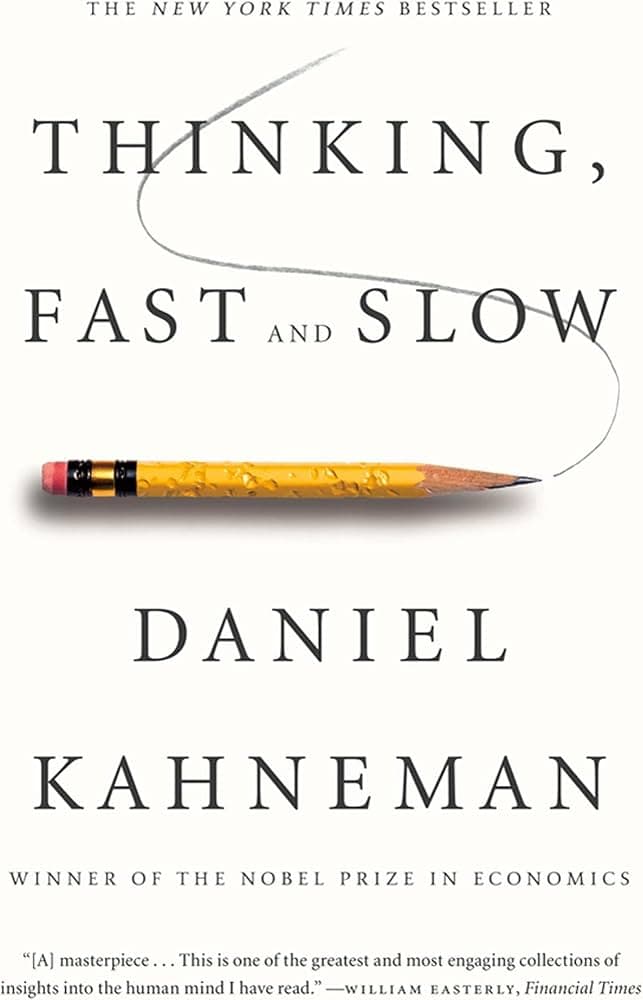
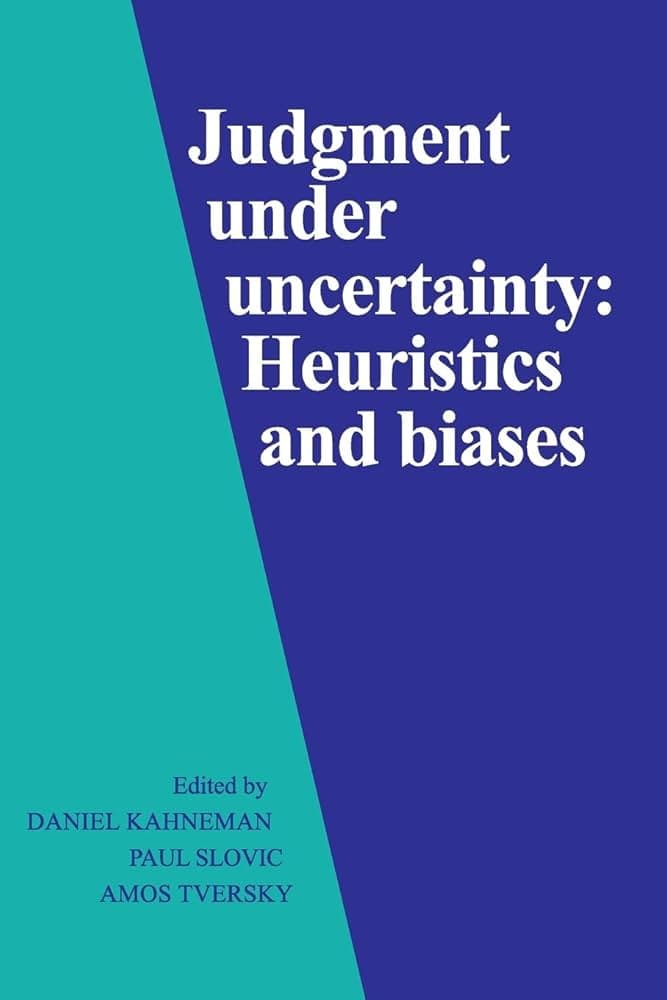
Nearby patterns.
Hyperbolic discounting
Hyperbolic discounting is the pattern in which a delay feels much more costly near the present than the same delay feels in the distant future..
Restraint bias
Restraint bias is overestimating how well your future self will resist a temptation, then placing that future self in its path..
Projection bias
Projection bias is assuming that future preferences will resemble the preferences we feel right now.
Planning fallacy
The planning fallacy is predicting a project from its best-case internal story while neglecting how similar projects actually went.
Delmore effect
The Delmore effect is the tendency to set clear, detailed, and articulate goals for the lower-priority areas of our lives, while our most important ambitions remain vague and unarticulated.
Decision fatigue
Decision fatigue is the claimed deterioration in decision quality after a long sequence of decisions: later choices drift toward defaults, avoidance, and impulsivity as the effort of active deciding accumulates.
Learn the wider pattern.
Dive deeper into Present bias and related biases in Decision-Making and Risk Biaseswith structured lessons, examples, and practice exercises.
Entry last reviewed 2026-07-19 · sources verified against the published literature — methodology