Insensitivity to sample size

Insensitivity to sample size is a cognitive bias where individuals, when evaluating statistical evidence, tend to disregard the size of the sample from which the evidence originates. This bias leads to overgeneralization from small samples and underestimation of variability based on sample size.

How it works

The insensitivity to sample size bias arises because humans often rely on heuristics or mental shortcuts when assessing statistical data. They focus more on the content or story presented by the data rather than the statistical reliability. The representativeness heuristic, where people judge probabilities based on how much one event resembles another, often overrides considerations of how the reliability of that information might change with different sample sizes.

Examples

  • Suppose a researcher presents data showing a high incidence of a rare disease from a small-town hospital. Observers may incorrectly assume that this is indicative of a larger trend, ignoring the fact that small sample sizes can easily lead to statistical anomalies.
  • In marketing, a company might test a new product with a small focus group and then prematurely assume widespread market success from positive feedback because they underestimate the importance of a larger, more diverse sample size.

Consequences

This bias can lead to flawed decision-making, inefficient policies, and misinterpretations of data. For example, researchers or policymakers might make incorrect generalizations from small studies, leading to ineffective solutions to large-scale problems or unwarranted panics.

Counteracting

To combat this bias, individuals should be educated about statistical concepts and the importance of sample size in interpreting data. Employing statistical tools and consulting with experts in data analysis can also help mitigate the effects of this bias. Moreover, encouraging the collection and presentation of data with clear transparency about sample sizes can raise awareness.

Critiques

While insensitivity to sample size is a well-documented bias, some critics argue that in real-world decision-making contexts, individuals may have constraints such as time and resources that necessitate the use of heuristics. There is also debate about how frequently this bias significantly impacts high-stakes decisions versus smaller scale or everyday scenarios.

Also known as

Small sample bias
Sample size neglect

Relevant Research

  • Belief in the Law of Small Numbers.

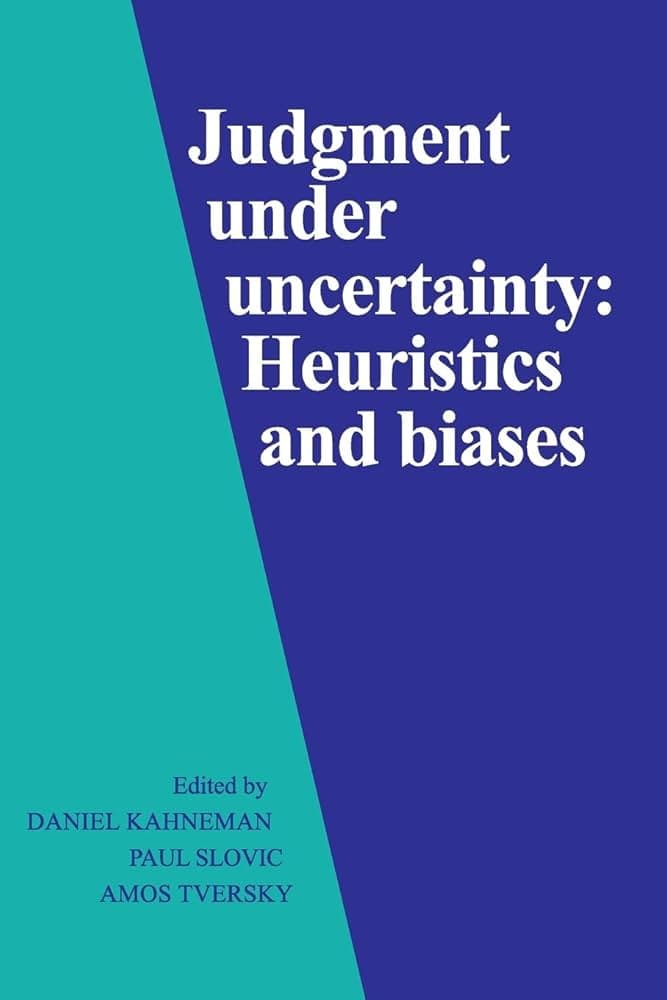
    Tversky, A., & Kahneman, D. (1971)

    Psychological Bulletin

  • Recent developments in modeling preferences: Uncertainty and ambiguity.

    Camerer, C., & Weber, M. (1992)

    Journal of Risk and Uncertainty

Case Studies

Real-world examples showing how Insensitivity to sample size manifests in practice

The Holiday Checkout Hiccup
A real-world example of Insensitivity to sample size in action

Context

BoltCart, a mid-size e-commerce retailer, prepared for its busiest season and wanted to increase conversions by simplifying checkout. The product team ran a quick pre-holiday A/B test on a redesigned one-page checkout to decide whether to roll the change out sitewide.

Situation

A two-week experiment routed roughly 400 visitors to the test (200 to the new checkout, 200 to the old flow) during a low-traffic weekday period. The test showed a higher conversion rate in the new checkout (12% vs 10%), which the product manager interpreted as a clear win and pushed for an immediate full rollout before the holiday rush.

The Bias in Action

Decision-makers focused on the observed uplift (20% relative increase) and ignored that the sample was tiny and non-representative of holiday traffic. They treated the short-run, small-sample result as if it had the same reliability as a properly powered experiment. The team also failed to compute a minimum detectable effect or confidence intervals, and assumed the measured difference would scale to the entire customer base. That overconfidence in a small sample led to dismissing uncertainty and not validating the result with a larger or more representative test.

Outcome

After the sitewide rollout, overall conversion fell to 9% over the holiday peak, contrary to expectations. Customer support volume rose from routine levels, and the company missed projected revenue targets. Management reversed the change after eight weeks, but the initial rollout had already cost time and money.

Study on Microcourse
Learn more about Memory and Information Processing Biases with an interactive course

Dive deeper into Insensitivity to sample size and related biases with structured lessons, examples, and practice exercises on Microcourse.

Test your knowledge
Check your understanding of Insensitivity to sample size with a short quiz

Apply what you've learned and reinforce your understanding of this cognitive bias.

Insensitivity to sample size - The Bias Codex