Focusing illusion
The focusing illusion is the tendency to exaggerate the importance of whatever we are currently thinking about. As Kahneman put it: nothing in life is as important as you think it is, while you are thinking about it. Attention inflates the weight of the attended factor in judgments of happiness, value, and choice.
How it works
When evaluating a whole (my life, this job, that city) while attending to a part (salary, weather, commute), the attended part dominates the evaluation far beyond its actual contribution to experience. Schkade and Kahneman's classic study: Midwesterners and Californians reported similar life satisfaction, but both groups predicted Californians would be happier — because the comparison put weather in the spotlight, and weather barely affects lived satisfaction.
Where it shows up
- Asking 'how would a higher salary change my happiness?' makes salary loom enormous, though income differences explain little satisfaction variance beyond sufficiency.
- A candidate weighing two offers fixates on the one vivid differentiator (office, title, brand) that daily experience will render invisible within weeks.
- Marketing works by directing focus: making one attribute the question makes it the answer.
What it can distort
- Major life decisions overweight vivid, comparable attributes and underweight the routine texture (commute, colleagues, autonomy) that dominates actual experience.
- Survey and forecast answers reflect what the question spotlighted rather than stable preferences.
How to work around it
- Evaluate options by simulating an ordinary Tuesday in each, not by comparing their headline features.
- List the factors you're NOT currently thinking about before deciding; the act of listing redistributes attention.
- Distrust any single-factor question ('what would X mean for you?') — including the ones you ask yourself.
Critiques and limits
Focusing effects are strongest in judgment tasks and forecasts; how much they distort real committed choices, where people deliberate longer, is less settled.
Fields of impact
How solid is the research?
Consistently demonstrated in judgment and affective-forecasting studies across domains.
Relevant papers
Schkade, D. A., & Kahneman, D. (1998)
Psychological Science, 9(5), 340-346
Kahneman, D., Krueger, A. B., Schkade, D., Schwarz, N., & Stone, A. A. (2006)
Science, 312(5782), 1908-1910
Real-world patterns.
When emotion starts driving the decision
A leadership team is reviewing a promising initiative under deadline pressure. Early reactions to the concept are strongly positive, and that emotional tone begins shaping the discussion before anyone has separated likely upside from operational risk.
Context
A team makes a high-stakes decision under time pressure, and their first emotional reaction starts shaping how risky and how promising the option feels.
Situation
Early signals look encouraging, the narrative feels compelling, and the group begins to evaluate the opportunity through that positive feeling instead of separating upside from downside.
The bias in action
The emotional tone of the option begins to stand in for careful analysis, shrinking perceived risk while inflating expected benefit.
Outcome
The decision moves forward with less scrutiny than it would have received under a more explicit risk-benefit review.
Continue reading for the full case, measurable impact, and lessons learned.
Want the full analysis?
Request access to the complete case study, including measurable impact, lessons learned, and the recommended better approach.
Recommended books
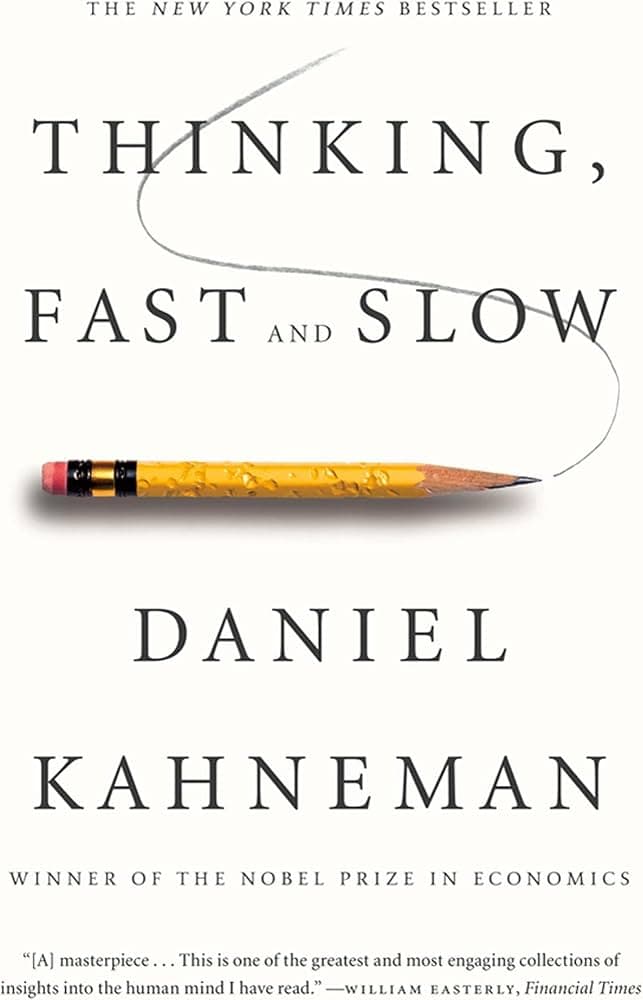
Nearby patterns.
Impact bias
Impact bias is overestimating how intensely and how long a future event will affect our feelings.
Anchoring
Anchoring is the pull of an initial number, price, or estimate on later judgment — even when the starting point is arbitrary.
Salience bias
Salience bias is the tendency to focus on information that is vivid, emotionally striking, or perceptually prominent while neglecting information that is duller but often more important.
Duration neglect
Duration neglect is underweighting how long an experience lasted when remembering or choosing it.
Distinction bias
Distinction bias is exaggerating the importance of small differences when options are compared side by side, even though the difference would barely matter in use..
Learn the wider pattern.
Dive deeper into Focusing illusion and related biases in Motivational and Emotional Distortionswith structured lessons, examples, and practice exercises.
Entry last reviewed 2026-07-19 · sources verified against the published literature — methodology