Availability heuristic

The availability heuristic is judging frequency, danger, or importance by how easily examples come to mind. What is vivid, recent, emotional, or repeatedly covered by media feels common — even when the base rate says otherwise.

Mechanism

How it works

Recall is fast and usually useful, so the mind treats ease of retrieval as evidence. But memory is not a random sample: headlines, personal experience, and dramatic images are overrepresented. A memorable example can therefore outweigh a large, quiet data set without anyone consciously choosing to ignore the data.

Examples

Where it shows up

  • After a heavily reported plane crash, flying feels more dangerous than driving even though the relative risk has not changed.
  • A manager treats three recent customer complaints as proof of a widespread defect without checking the total number of customers affected.
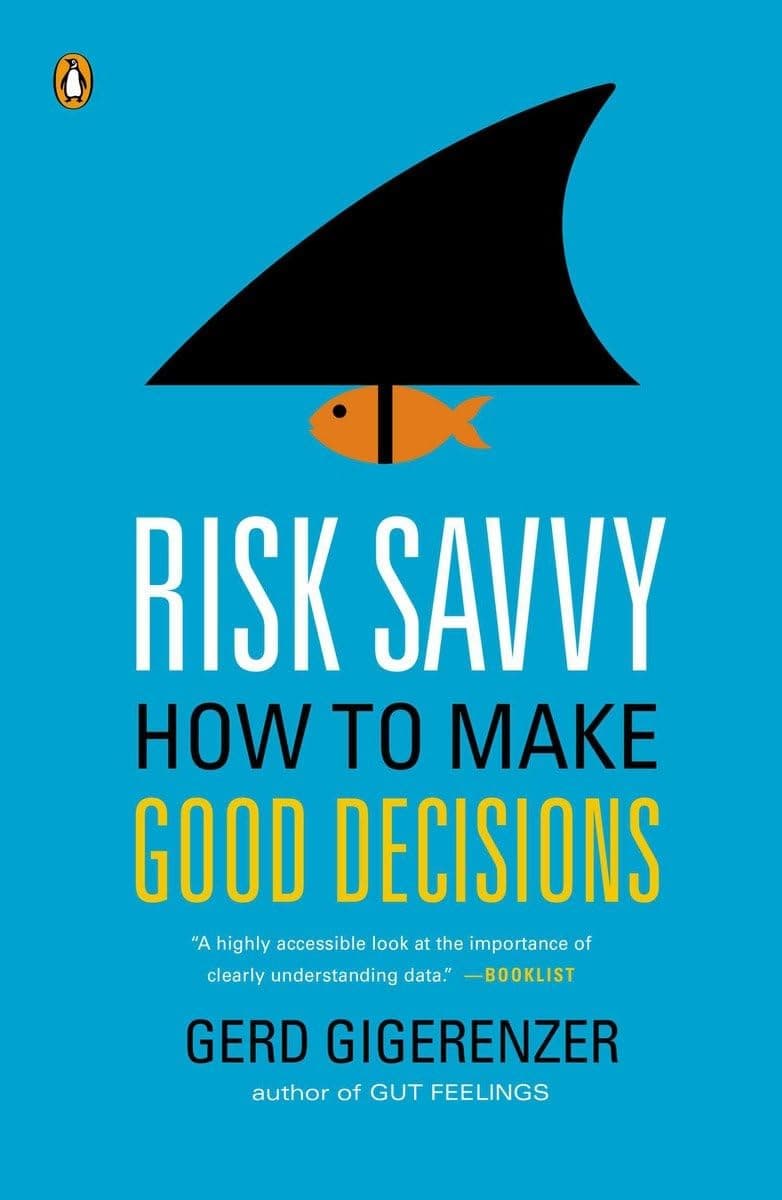
  • Shark attacks feel common because a single vivid story is easier to recall than the far more frequent risks that never make the news.
Consequences

What it can distort

  • Resources follow spectacular risks while common, less memorable harms are neglected.
  • Recent anecdotes become evidence of a trend, distorting risk judgments, hiring decisions, policy, and product priorities.
Countermeasures

How to work around it

  • Ask for the denominator: how many cases exist in total, not how many you can recall.
  • Check whether your examples come from memory or from data; if memory, get the data before deciding.
  • Correct for source volume: vivid, recent, and media-amplified events are oversampled in recall by construction.
Caveats

Critiques and limits

Easy recall is sometimes informative: frequent events can be easier to remember. The bias arises when the visibility of an event is driven by attention or media volume rather than by its actual frequency.

Taxonomy

Fields of impact

Evidence

How solid is the research?

Robust — replicates reliably

Foundational and repeatedly confirmed, including the ease-of-retrieval paradigm (Schwarz et al. 1991); interpretation debates concern mechanism, not existence.

Research

Relevant papers

Availability: A heuristic for judging frequency and probability

Tversky, A., & Kahneman, D. (1973)

Cognitive Psychology, 5(2), 207-232

Ease of retrieval as information: Another look at the availability heuristic

Schwarz, N., Bless, H., Strack, F., Klumpp, G., Rittenauer-Schatka, H., & Simons, A. (1991)

Journal of Personality and Social Psychology, 61(2), 195-202

How do people judge risks: Availability heuristic, affect heuristic, or both?

Pachur, T., Hertwig, R., & Steinmann, F. (2012)

Journal of Experimental Psychology: Applied, 18(3), 314-330

Case studies

Real-world patterns.

Real-world examples showing how Availability heuristic manifests in practice

Case study

Slamming the Door After a Headline: How a SaaS Provider Overreacted to High-Profile Breaches

A real-world example of Availability heuristic in action

Context

A mid-size B2B SaaS company providing invoicing and payroll tools served tens of thousands of small-business customers. Senior leadership became alarmed after a highly publicized, unrelated enterprise data breach dominated tech press and social feeds for several weeks.

Situation

Under pressure from the board and worried about reputational damage, the security team rapidly proposed mandatory company-wide password resets and SMS-based two-factor authentication (2FA) for every user, to be rolled out within two weeks. The decision was driven largely by recent media coverage and executives' vivid recollections of customer outrage in other companies, rather than internal incident data.

The bias in action

Decision-makers overweighted the recent, salient examples of breaches they had seen in headlines and social media, assuming similar risk for their own platform. They placed disproportionate emphasis on these memorable stories and the perceived PR risk instead of consulting internal telemetry showing historic compromise attempts were extremely rare and concentrated in a small subset of accounts. Because the vividness of media reports made breach risk feel immediate and large, the team skipped a phased pilot and broad user testing. As a result, the organization adopted a one-size-fits-all, high-friction security change based on readily available examples rather than a balanced appraisal of likelihood and impact.

Outcome

Within six weeks of rollout the company saw a meaningful drop in user activity: sign-ins decreased, new-account conversions fell, and support volume surged. Several long-standing customers complained about lost invoices and difficulty onboarding staff, prompting negative online reviews. Leadership spent additional engineering and support resources reversing parts of the change and implementing mitigations.

What's inside the full case study

Unlock the deeper breakdown with real-world impact, measurable effects, lessons learned, better-approach recommendations, and relevant fields.

Real-world impact
Affected groups, timeframe, and measurable outcomes.
Lessons learned
Practical takeaways and a better path forward.
Full case breakdownEmail access

Want the full analysis?

Request access to the complete case study, including measurable impact, lessons learned, and the recommended better approach.


We'll use your email to follow up about case-study access.

Further reading

Recommended books

Entry last reviewed 2026-07-16 · sources verified against the published literature — methodology

Availability heuristic - The Bias Codex